



Space Solar Array Simulators
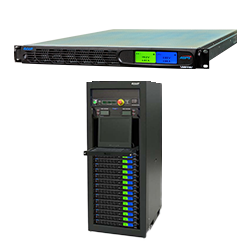
Engineered for spacecraft and advanced PV testing, AMETEK Programmable Power’s ASPS Series accurately emulates real‑world photovoltaic I‑V behaviour to validate satellite PCDUs, MPPT algorithms, and mission‑critical electronics. With ultra‑fast transient response, peak power tracking, and robust protections, they replicate conditions like eclipse, shading, and end‑of‑life operation—accelerating design, verification, and production testing.
Built for high‑performance R&D and production, these DSP‑controlled systems offer full remote operation via SCPI over Ethernet and an intuitive touchscreen UI. Features like active PFC, fault logging, self‑test, and flexible programming ensure reliable, repeatable results and seamless integration into automated test stands. Their flexibility and precision make them ideal for advancing development in solar, microgrid, and renewable energy applications.
Frequently Asked Questions
-
What are space solar array simulators?
Space solar array simulators are programmable power systems that recreate the electrical behavior of spacecraft solar arrays in a controlled test environment. Since engineers cannot fully replicate how solar arrays perform in orbit while testing on Earth, these simulators provide a realistic way to validate satellite power systems, PCDUs, peak power tracking, and mission-critical electronics under repeatable lab conditions.
-
What are space solar array simulators used for?
Space solar array simulators are used to test spacecraft power systems by reproducing the current-voltage behavior of solar arrays across controlled operating scenarios. They help engineers run repeatable design, verification, and production tests under controlled operating conditions.
-
What do space solar array simulators emulate?
Space solar array simulators emulate the I‑V (current-voltage) behavior of real spacecraft solar arrays. In simple terms, this represents how solar array voltage and current interact as electrical loads change. By reproducing this behavior, engineers can create realistic spacecraft power conditions in the lab and evaluate how satellite power systems respond before deployment.
Depending on the system and configuration, simulators can also replicate conditions such as eclipse, shading, and end-of-life operation used in spacecraft testing. -
How do space solar array simulators support satellite PCDU testing?
Space solar array simulators help test how satellite PCDUs respond to changing solar array output, load conditions, and power transfer demands. By reproducing dynamic array behavior, they allow engineers to evaluate power conditioning, distribution, conversion response, shunt regulation, and interaction with spacecraft power electronics before launch.
-
How do space solar array simulators support MPPT and peak power tracking validation?
Space solar array simulators support MPPT and peak power tracking validation by providing controlled I-V curves that allow engineers to test how spacecraft power systems locate, track, and extract maximum available power. This is especially important when validating peak power tracking algorithms under dynamic solar array conditions.
-
Can space solar array simulators replicate eclipse conditions for spacecraft testing?
Yes - space solar array simulators can replicate eclipse-like conditions so spacecraft power systems can be tested through reduced solar input and transition events that are important in orbital power testing.
-
Which space solar array simulator does AMETEK Programmable Power offer?
AMETEK Programmable Power offers the ASPS Series (Advanced Solar Power Simulator) for spacecraft and satellite power system testing. Designed specifically for space solar array simulation applications, the ASPS Series supports features such as 2 μs shunt switching recovery, peak power tracking, DSP-based control, fault data recording, power-on self-test, and primary and secondary over-voltage and over-current protection. These capabilities make it well suited for satellite PCDU validation and demanding spacecraft power test environments.
-
What is the ASPS Series used for in space solar array simulator applications?
The ASPS Series is used to emulate spacecraft solar array behavior for validating satellite PCDUs, MPPT algorithms, and mission-critical spacecraft electronics. Key capabilities include peak power tracking, fast shunt switching recovery, primary and secondary over-voltage and over-current protection, fault data recording, power-on self-test, DSP-based control, and touchscreen monitoring.
-
Why is fast shunt switching recovery important in a space solar array simulator?
Fast shunt switching recovery is important because spacecraft PCDUs often use shunt regulators to control excess solar array power. When these systems rapidly switch loads on and off, the solar array simulator must respond without introducing errors that could affect test results. The ASPS Series supports 2 μs shunt switching recovery, helping engineers accurately evaluate power transfer, regulation performance, and system stability under realistic spacecraft operating conditions.
-
Can AMETEK space solar array simulators be remotely controlled for automated test stands?
Yes - AMETEK's space solar array simulator platform supports remote operation through SCPI commands over Ethernet and AMETEK SAS software. This enables integration into automated spacecraft test stands and repeatable validation workflows.
-
Are space solar array simulators the same as optical solar simulators?
No - space solar array simulators are electrical emulators that reproduce photovoltaic I-V behavior, while optical solar simulators are light sources used to illuminate PV devices. This category focuses on electrical solar array emulation for spacecraft power electronics testing, not optical illumination testing.
-
What specifications matter most when choosing a space solar array simulator?
Important specifications include voltage, current, power, peak power tracking capability, shunt switching recovery, protection features, and transient response. For satellite and spacecraft applications, engineers should also consider whether the simulator can support mission scenarios such as eclipse, shading, and end-of-life array behavior.
-
How do I choose the right space solar array simulator for my program?
Choose the right space solar array simulator based on your required output levels, spacecraft power architecture, PCDU requirements, and the mission conditions you need to emulate. For programs involving satellite PCDUs, fast switching behavior, automated testing, and precise spacecraft solar array emulation, the ASPS Series is positioned as a dedicated solution.
👉 Contact Us | Request a Quote