



Bidirectional Regenerative Power Supplies & Grid Simulators
Bidirectional regenerative DC power supplies and regenerative grid simulators are programmable power test systems that control power flow in both directions while recovering energy back to the utility grid. DC systems support battery, inverter, power electronics, and energy storage testing, while regenerative grid simulators reproduce AC grid conditions for inverter, UPS, EVSE, V2G, and grid-compliance validation.
Two Regenerative Platform Types
For DC source/sink testing, battery cycling, battery simulation, DC-bus emulation, and power electronics validation.
Featured platforms: Mi-BEAM, Mi-BEAM Power Rack, and i-BEAM.
For AC grid simulation, line-condition testing, power-quality event reproduction, and grid-tied equipment validation.
Featured platform: Sequoia Series.
Bidirectional Regenerative DC Power Supplies
A bidirectional DC power supply, also described as a regenerative DC power supply or source/sink power supply, can deliver DC power to a device under test and absorb power flowing back from it. During sink operation, recovered energy is returned to the facility grid. This bidirectional source/sink capability supports battery cycler and battery emulator workflows, EV battery test power requirements, and controlled validation of converters, inverters, drivetrains, DC buses, and energy storage systems.
Primary DC Test Applications
- Battery testing and battery cycling
- Battery simulation and DC-bus emulation
- EV powertrain, traction inverter, and drivetrain testing
- Energy storage system and bidirectional converter testing
- Fuel cell and DC-source loading
- Solar/PV array simulation
- AI data center component testing and validation
DC Product Listing
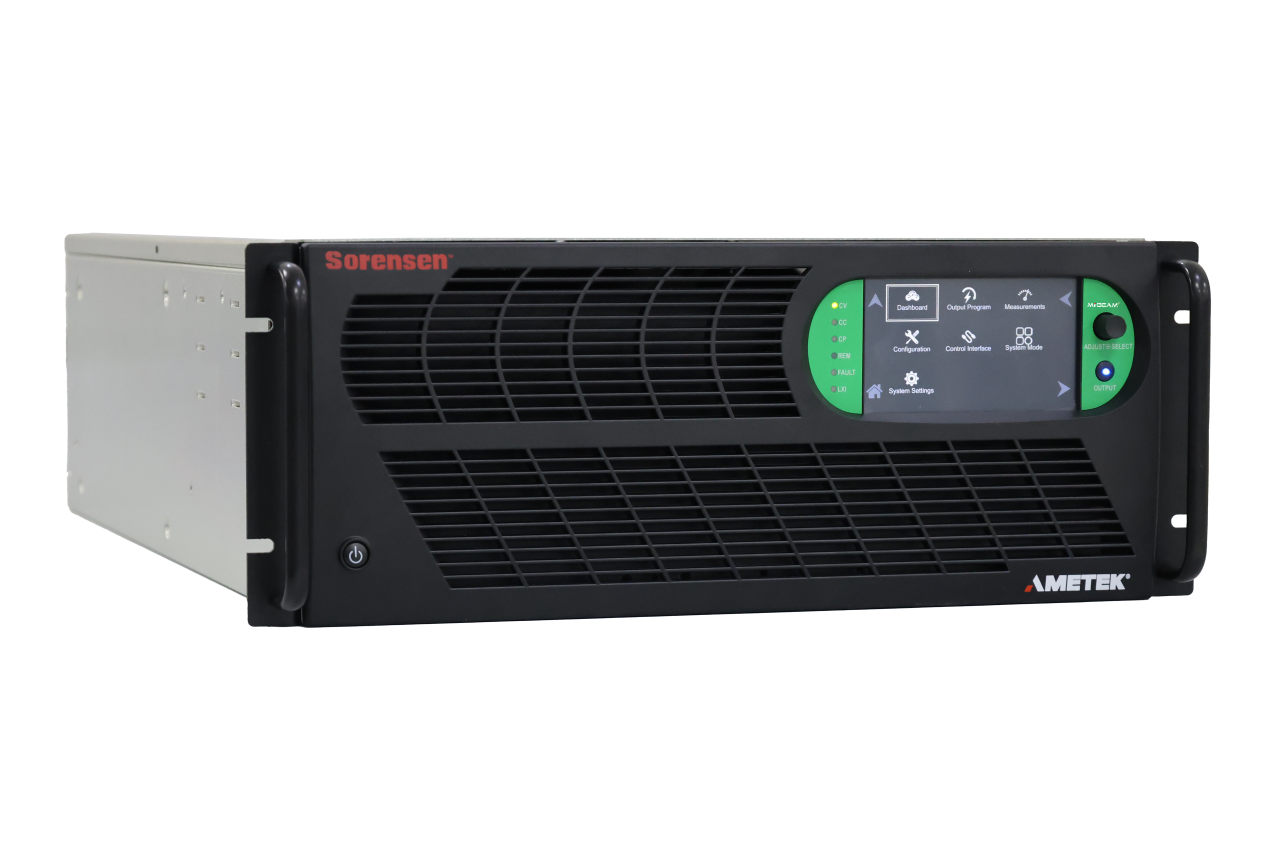
Mi-BEAM Series
High-Performance, Modular, Bidirectional, Regenerative, Programmable DC Power System
- Modular architecture for flexible system configuration.
- Broad voltage coverage for diverse DC test requirements.
- Parallel operation supports scaling from individual modules to multi-megawatt systems.
- Bidirectional and regenerative operation supports efficient source/sink testing.
Mi-BEAM Power Rack
Integrated Rack-Based Mi-BEAM Configuration
A rack-based Mi-BEAM configuration for customers who need an integrated, scalable DC power system.
- Integrated rack configuration based on the Mi-BEAM platform.
- Designed to simplify deployment of higher-power modular systems.
- Supports bidirectional, regenerative DC test workflows.
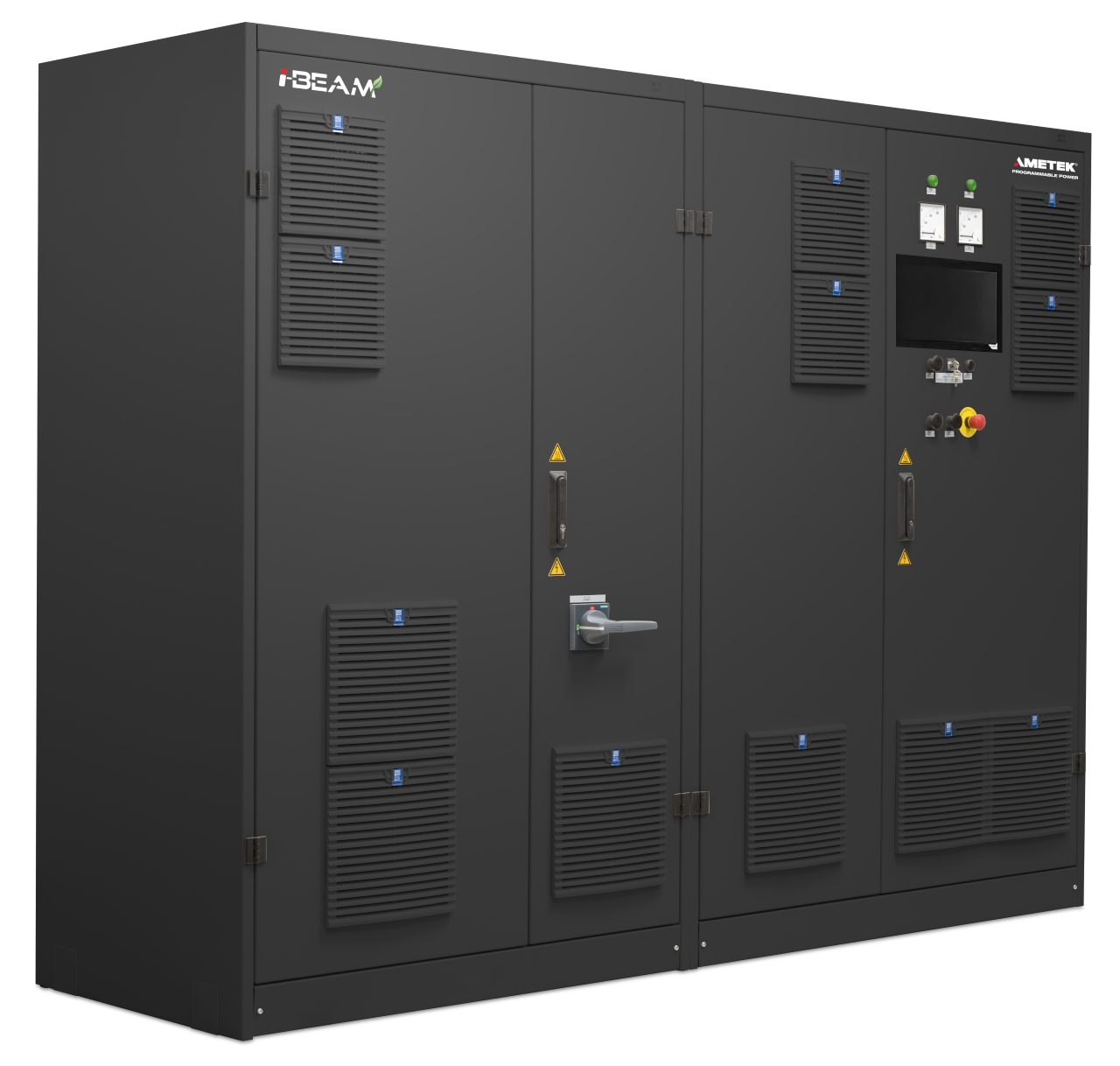
i-BEAM Series
High-Performance, Bidirectional, Regenerative, Programmable DC Power System
- High-current capability for demanding DC test programs.
- Water-cooled option available.
- Up to 4 channels with shared DC link.
- Parallel operation extends current and power for larger test systems.
- Bidirectional, regenerative operation supports rapid source/sink test workflows.
Bidirectional Regenerative Grid Simulators
A regenerative grid simulator, also called a grid simulator or AC grid simulator, generates controlled AC voltage, current, frequency, phase, and line conditions for a device under test. As a regenerative AC source, it can reproduce normal operation and power-quality events while returning absorbed energy to the facility grid. This supports repeatable PV inverter, V2G, UPS, EVSE, and grid-compliance validation without relying on changing utility conditions.
Primary AC and Grid Test Applications
- PV inverter and grid-tied inverter testing
- UPS and backup power testing
- EVSE and vehicle-to-grid testing
- Battery energy storage system validation
- Grid disturbance and compliance testing
- AI data center component testing and grid simulation
Grid Simulator Product Listing
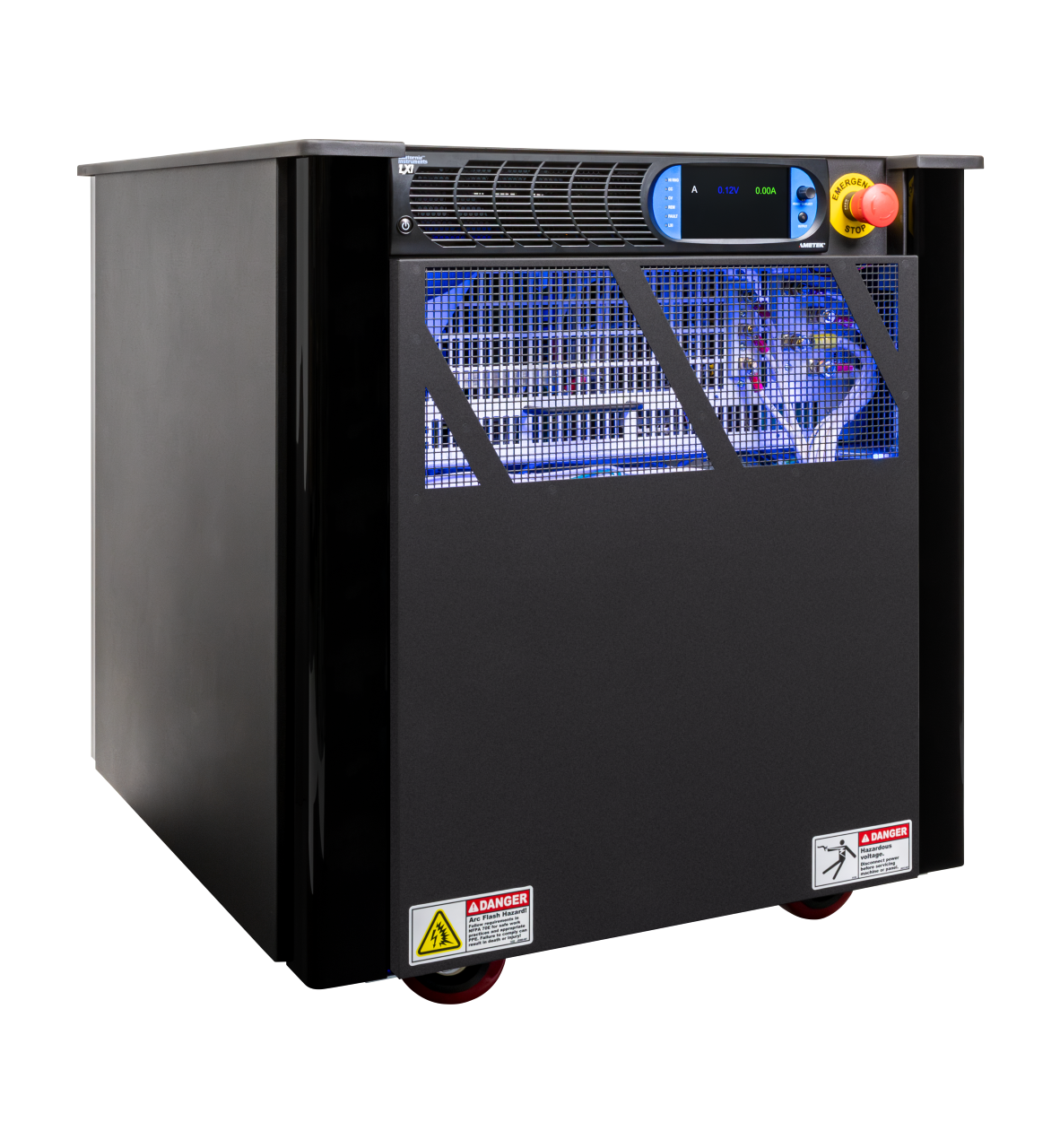
Sequoia Series
Precision Programmable Regenerative Grid Simulator
- Programmable AC grid simulation for controlled and repeatable validation.
- Wide power range from 15 kVA to 5 MVA.
- Supports high-current, three-phase grid and line-condition test requirements.
- Regenerative operation returns absorbed energy to the facility grid.
Compare the Two Product Types
| Choose bidirectional regenerative DC power supplies when you need | Choose bidirectional regenerative grid simulators when you need |
| DC source/sink testing | AC grid simulation |
| Battery cycling | Power-line disturbance testing |
| Battery or DC-bus emulation | Grid-tied inverter validation |
| Bidirectional DC power electronics validation | AC source/sink behavior with energy returned to the grid |
| DC-side AI data center component validation | AC-side AI data center power and grid-condition validation |
Key Capabilities Across Both Platforms
Although DC power supplies and AC grid simulators serve different electrical test needs, both platform types share a common goal: precise, efficient, and scalable validation of modern power systems.
- Regenerative operation that recovers absorbed energy
- High-efficiency testing with reduced heat generation compared with dissipative-only approaches
- Precision programmable control
- Support for automated and repeatable test integration
- Scalable configurations for laboratory, validation, and high-power system requirements
Applications
Battery testing and battery cycling: Source power to charge batteries and sink power during discharge testing.
Fuel cell and drivetrain testing: Operate as a controlled DC load for fuel cells, EV drivetrains, and other DC power sources.
DC source/sink testing: Validate batteries, DC buses, energy storage systems, and bidirectional power electronics.
Solar/PV simulation: Create controlled and repeatable solar-array input conditions.
AI data center component validation: Test DC power-conversion components and bidirectional power stages under controlled source/sink conditions.
PV inverter and grid-tied inverter testing: Reproduce AC grid conditions to validate performance under normal, abnormal, and changing line conditions.
UPS and backup power testing: Recreate voltage dips, frequency changes, outages, and recovery conditions.
EVSE and vehicle-to-grid testing: Support charging and V2G test scenarios.
Grid disturbance and compliance testing: Evaluate response to sags, swells, frequency variation, and phase imbalance.
AI data center grid simulation: Validate AC input behavior, UPS systems, and grid interaction under programmable conditions.
Product Selection Snapshot
Frequently Asked Questions
Select any question below to expand its answer.