



As the aerospace and defense industries accelerate toward electrification, the demand for high-performance, bidirectional DC power supplies has surged. From hybrid-electric aircraft to advanced unmanned aerial vehicles (UAVs), the ability to simulate, test, and validate high-voltage battery systems is now mission-critical.
This blog explores how bidirectional programmable DC power systems—like the I-BEAM Series and MI-BEAM Series—are enabling real-world battery emulation, regenerative energy recovery, and seamless integration with automated test benches for aerospace applications.
 |
|
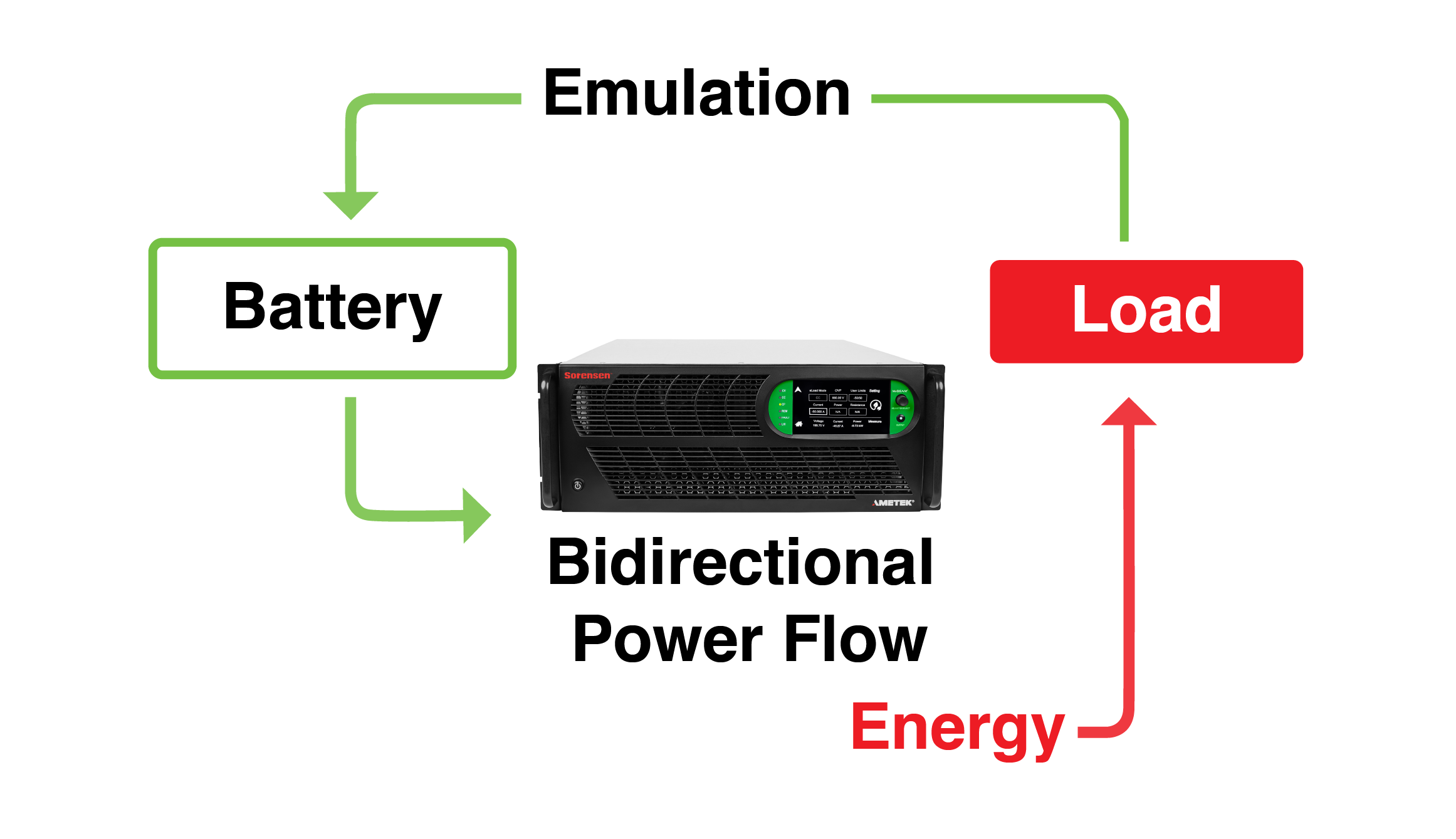
Diagram - Bidirectional power flow showing battery emulation and regenerative recovery |
Real-World Battery Emulation: Simulating Flight-Ready Energy Systems
Modern aerospace platforms rely on high-voltage lithium-ion and solid-state batteries for propulsion, avionics, and onboard systems. Accurate simulation of these batteries is essential for:
- Validating charge/discharge cycles
- Testing thermal behavior under load
- Emulating fault conditions and recovery protocols
The I-BEAM Series offers bidirectional DC power up to 650 kW, with voltage ranges up to 1,500 V and current up to 1,200 A. Its real-time control loop enables precise emulation of battery dynamics, making it ideal for hybrid aircraft propulsion testing.
✅ Use Case: Simulating a 600 V battery pack for a hybrid-electric vertical takeoff and landing (eVTOL) aircraft during rapid ascent and descent cycles.
Regenerative Energy Recovery: Efficiency Meets Sustainability
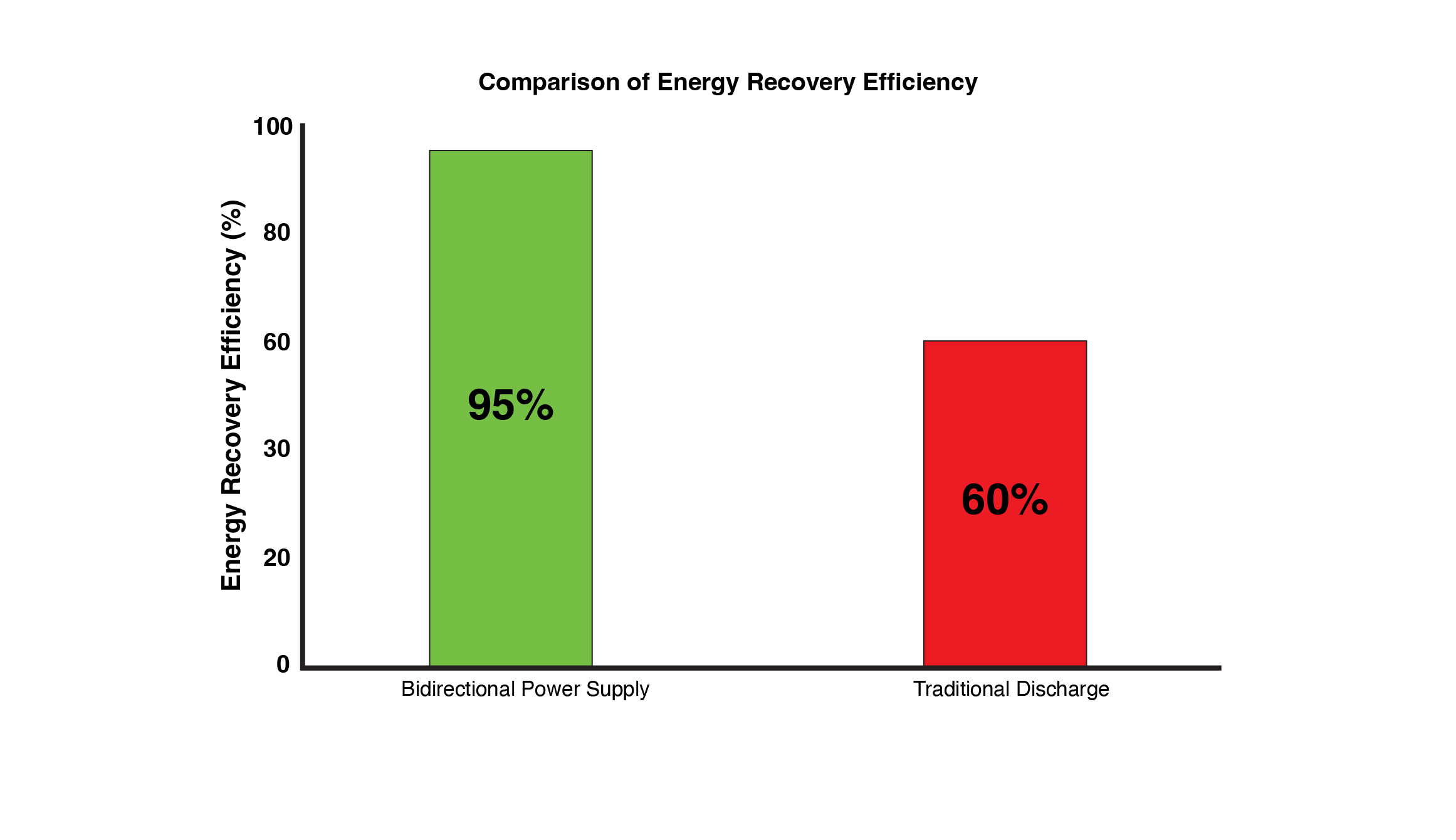
Traditional battery testing often wastes energy during discharge. Bidirectional power supplies solve this by feeding energy back into the grid or test environment, reducing heat dissipation and improving energy efficiency.
 |
|
Efficiency Chart - Comparison of energy recovery vs. traditional discharge methods |
The MI-BEAM Series supports regenerative operation with up to 95% efficiency, making it suitable for:
- Battery recycling and second-life validation
- Energy recovery in propulsion system testing
- Sustainable lab operations in defense R&D
✅ Use Case: Testing battery packs for UAVs used in silent reconnaissance missions, with energy recovery during simulated descent and braking.
Integration with Automated Test Benches: Streamlining Aerospace R&D
Aerospace labs demand automation, repeatability, and precision. Both I-BEAM and MI-BEAM series support:
- SCPI and ModBus protocols
- Ethernet, USB, and CAN interfaces
- LabVIEW
This allows seamless integration into automated test benches, enabling:
- Multi-cycle battery stress testing
- Fault injection and recovery validation
- Real-time data logging and analysis
✅ Use Case: Automated testing of battery strings for satellite power systems under simulated orbital conditions.
Technical Highlights: I-BEAM & MI-BEAM Series
| Feature | I-BEAM Series | MI-BEAM Series |
| Power Range | Up to 650 kW | Up to 37kW |
| Voltage Range | Up to 1,500 V | Up to 2,000 V |
| Bidirectional Operation | Yes | Yes |
| Regenerative Efficiency | ~94% | ~95% |
| Interfaces | Ethernet, Modbus/TCP-IP, CAN | USB 2.0, Ethernet, RS-232C CAN |
| Applications | Aircraft propulsion, EV, battery simulation | UAVs, satellite systems, battery recycling |
Conclusion
As aerospace electrification advances, bidirectional programmable DC power supplies are no longer optional—they’re foundational. With the I-BEAM and MI-BEAM Series, engineers can simulate real-world battery behavior, recover energy efficiently, and automate complex test protocols with precision.
These systems are not just powering tests, they’re powering the future of flight.