



Engineered Systems
Custom Power Supply Integrations for Automated Test Systems
When a catalog product cannot completely satisfy a requirement, AMETEK Programmable Power’s Solutions Business delivers custom power supply systems and integrations—from OEM integration in medical and semiconductor environments to modular avionics ATE power subsystems and turnkey solar array simulators for satellites.
Why Engineered Systems?
Built for requirements that don’t fit a datasheet
Engineered Systems are purpose-built power solutions created when standard products need modification, integration, or complete system engineering to meet electrical, mechanical, control, safety, or environmental requirements.
Designed for speed, value, and lower risk
AMETEK’s Solutions team commonly builds engineered systems using existing technology and previously developed integration solutions to deliver maximum functionality, short lead times, and strong overall value.
Key Capabilities
- Catalog product modifications for specialized application requirements
- OEM power supplies (heating, burn-in, process power, embedded use)
- AC stimulus systems for current transformer & circuit breaker testing
- Solar Array Simulation for satellites and space power validation
- PV emulation for inverter verification and renewable power testing
- DC power source + regenerative load systems for actuators, motors, and energy cycling
- High-energy laser power racks & current sources
Choose Engineered Systems when you need:
- A turnkey rack/system instead of a single instrument
- Multi-source/multi-load power with sequencing and automation (ATE environments)
- Space power validation: solar array simulation, battery string simulation, spacecraft power bus simulation
- Radar/defense facilities needing sequenced programmable power for test operations
- Semiconductor and industrial environments requiring specialized process power integration
👉 Request a Quote | Talk to an Engineer
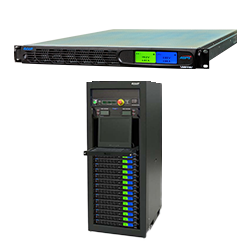
ASPS Series
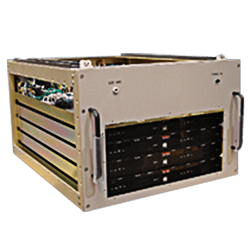
Avionics ATE Power Subsystem
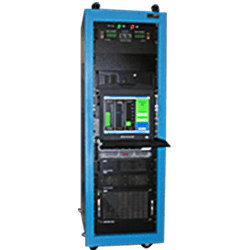
Battery String Simulator (BSS)

DC Power / Energy Absorber Test System
Description: DC Power and Regenerative Load Applications

m-SAS Series

OEM DC Power System for Semiconductor
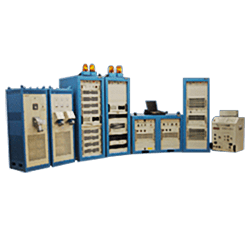
Power Special Test Equipment (PSTE)

Programmable High-Current (Copperhead)
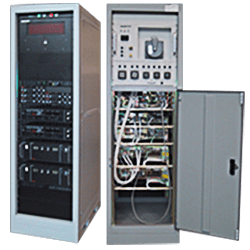
Radar Power Bus Simulation
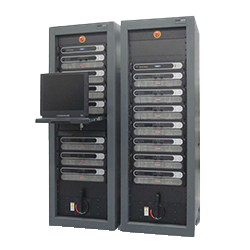
Solar Array Simulator (SAS)
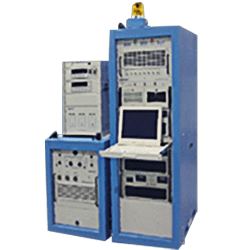
Spacecraft Power Bus Simulator
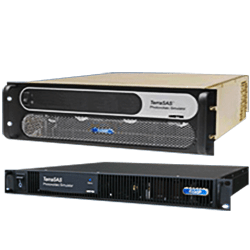
TerraSAS (ETS Series)
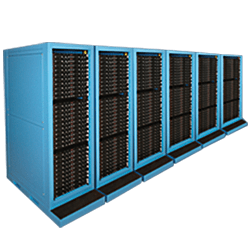
Thermal Vacuum Heater Power
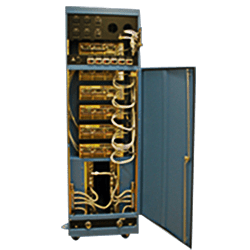
Water Cooled Laser Power Current Source
Frequently Asked Questions
-
What are engineered systems in programmable power?
Engineered systems are custom power supply systems and integrations created when standard catalog products don’t fully meet your technical or operational requirements—often delivered as turnkey racks or subsystems for automated test and specialized applications.
-
When should I choose an engineered system instead of a standard product?
Choose an engineered system when you need custom integration, modified performance, specialized controls, multi-source sequencing, or turnkey rack delivery—especially in aerospace/defense test, semiconductor process power, and OEM integration scenarios.
-
What kinds of solutions does AMETEK Programmable Power engineer?
AMETEK’s Solutions team delivers systems ranging from OEM integrations to modular avionics ATE power subsystems, turnkey solar array simulators for satellites, and customized systems such as PV emulation, radar bus simulation, and DC source + regenerative load solutions.
-
Can AMETEK modify catalog power supplies for my application?
Yes. The Engineered Systems offering includes catalog product modifications to meet specific application requirements (electrical behavior, integration constraints, system packaging, etc.).
-
What does “custom power supply integration” mean for automated test systems?
It means delivering a configured power subsystem (hardware + controls + protection + interfaces) that fits your ATE workflow, reduces bench complexity, and speeds system commissioning—often as a ready-to-integrate rack or platform.
-
What is a solar array simulator (SAS/ASPS) used for?
A solar array simulator is used to emulate photovoltaic I‑V behavior for validating spacecraft power electronics such as PCDUs and MPPT algorithms, enabling repeatable testing without a real array.
-
Why are satellite solar array simulators important?
Because spacecraft power systems must handle changing conditions (operational dynamics, bus regulation behavior, and control algorithms). A simulator provides controlled, repeatable I‑V emulation to verify system performance before deployment.
-
What is a battery string simulator (BSS)?
A battery string simulator is a test system that replicates battery pack behavior to support spacecraft and system validation—helping teams test charging, discharge behavior, and system interactions without using real flight batteries.
-
What’s the difference between static and dynamic battery simulation?
Battery string simulators commonly support:
- Static mode: outputs a terminal voltage corresponding to a selected state-of-charge
- Dynamic mode: updates terminal voltage by tracking charge/discharge energy over time for more realistic behavior
-
What is radar power bus simulation?
Radar power bus simulation provides sequenced programmable power to test facilities so engineers can validate how radar subsystems behave across operating conditions without relying on final power infrastructure.
-
What is a spacecraft power bus simulator?
A spacecraft power bus simulator provides controlled power stimulus to spacecraft subsystems—often modeling multiple independent sources—so payload and subsystem interfaces can be verified before flight integration.
-
What is PV emulation and why is it used for inverter verification?
PV emulation reproduces solar-array electrical behavior so teams can verify inverter controls (like operating-point tracking) and system response under repeatable lab conditions.
-
What is thermal vacuum TVAC heater power used for
Thermal vacuum heater power supports TVAC satellite chamber testing, enabling controlled heating during vacuum-based qualification and environmental testing.
-
What is a DC power / energy absorber test system?
It’s a system combining programmable DC power delivery with an energy absorption or regenerative load capability, supporting development and test workflows where power must be sourced and then safely absorbed/managed.
-
What interfaces and automation methods are common for these systems?
Engineered systems often support lab and ATE integration through standard command/control approaches. For example, AMETEK’s solar array simulator systems emphasize remote control and integration-friendly operation for advanced test workflows.
-
How do I specify an engineered power system request?
Provide your required voltage/current/power range, number of channels, transient behavior, control interfaces, safety needs, rack constraints, and the DUT/test standard requirements. (We’ll map this to an engineered integration approach.)
-
What industries commonly use engineered systems?
AMETEK positions engineered solutions for medical and semiconductor OEM integrations, avionics/military test stands, space power validation, and other advanced test applications.
-
Can you deliver turnkey systems for satellites and space power testing?
Yes—engineered solutions include turnkey solar array simulators for satellites and spacecraft test equipment options listed under the Engineered Systems portfolio.
-
What is the purpose of a PV simulator?
PV simulators create a controlled light source that mimics sunlight, allowing researchers to test the performance of solar cells and modules in a lab setting, regardless of weather conditions.
-
What are the different types of PV simulators?
Simulators can be categorized by their light source, such as Xenon arc lamps for continuous light or pulsed laser-based systems. They can also be classified by their spectral match to sunlight, with AAA-grade simulators providing the highest spectral accuracy.
-
How are PV simulators used?
Simulators are used to test solar cell efficiency, determine IV curves, and evaluate the performance of different module designs under varying conditions.
-
What are the advantages of using a PV simulator?
PV simulators provide controlled and reproducible testing conditions, allowing for accurate comparison of different solar cell technologies and module designs.
-
How do I choose the right PV simulator?
Consider the specific requirements of your testing, such as the size of the area to be illuminated, the desired spectral match to sunlight, and the available budget.
-
What is a Spacecraft Power Bus Simulator?
A Spacecraft Power Bus Simulator is a system that models the electrical power distribution network of a spacecraft, allowing engineers to test and verify designs before hardware implementation.
-
Why is a Spacecraft Power Bus Simulator important?
These simulators are crucial for verifying the functionality of spacecraft subsystems, their interfaces, and overall system performance.
-
How do I calibrate a PV simulator?
Calibration is typically done using a reference solar cell or a photodiode to ensure the simulator's output is accurate and stable.
-
What are the limitations of PV simulators?
Simulators may not perfectly replicate all aspects of natural sunlight, such as the spectral distribution, and may have limitations in terms of irradiance range.
-
What is a Thermal Vacuum Heater Power system?
It simulates the harsh vacuum and temperature conditions of space. These systems are used to test spacecraft components to ensure they can handle thermal extremes and operate reliably in orbit.
-
What to consider when choosing a Thermal Vacuum Heater Power setup?
Key considerations include:
- Thermal control precision
- Heating and cooling power
- Size and shape of the test article
- Integration with vacuum systems and sensors
-
What is a vacuum furnace?
A vacuum furnace removes air from its chamber to allow heat treatment of metals or components in a controlled atmosphere, avoiding oxidation and contamination.
-
What is thermal evaporation?
Thermal evaporation is a method for applying thin material coatings. The source material is heated in a vacuum until it vaporizes, then condenses onto the target surface.